
GovTech Maturity Index 2025: What the World Bank’s Latest Snapshot Signals for Public-Sector Digital Markets
The World Bank’s GovTech Maturity Index 2025 reviews digital transformation across 197 economies using 48 indicators. This summary highlights the widening digital divide, progress in cloud/interoperability and digital ID, persistent gaps in service portals and civic tech, and what these trends may mean for federal government contractors.

Understanding DFARS 252.204-7021 Through the Contracting Officer’s Hidden Checklist
Jacob Horne explains that DFARS 252.204-7021 is not merely a contract clause—it is the visible edge of a contracting officer procedure set in DFARS 204.75 that dictates when CMMC applies, when awards and options are prohibited, and how “current” CMMC status is verified in SPRS using a CMMC UID tied to a specific assessed enclave.

GAO’s Warning Shot on Federal Awards: Documentation Gaps That Elevate Fraud, Waste, and Abuse Risk
GAO reviewed five major federal award programs and found that, except for FCC’s E-Rate, agencies often lacked fully documented fraud-prevention policies tied to OMB and GAO leading practices. The report signals tighter monitoring, clearer antifraud expectations, and greater audit readiness demands for federal contractors and recipients.

Markon LLC (B-423767): Cost Realism, Unstated Criteria, and the Limits of “Off-the-Record” Instructions
GAO sustained Markon’s protest because CIA’s cost realism adjustment relied on oral “industry Q&A” instructions that were never incorporated into the final RFP. The decision reinforces a core rule for contractors: evaluation turns on the solicitation and the contemporaneous record, not informal guidance.

The Claims Reality Check: What FY2025 ASBCA/CBCA Numbers Say About Your Odds—and When ADR Actually Pays
FY2025 ASBCA and CBCA statistics challenge the myth that contractors cannot win CDA appeals. Learn what merits outcomes imply about your odds and when ADR is most likely to deliver faster, lower-variance resolutions.

When the FAR Isn’t the Rulebook: A Quiet Reminder from the GAO OIG’s Latest Semiannual Report
A GAO OIG case closed on a simple premise—GAO is not subject to the FAR. This post explains why that matters for contractors, how “FAR-default” thinking creates proposal and compliance risk, and what to do instead when pursuing work with entities operating under different procurement authorities.

“When ‘TBD’ Means TBD”: Solvere Technical Group and the Limits of Unstated Evaluation Criteria
Solvere Technical Group (GAO B-423785) is a must-read staffing-plan decision: GAO sustained where Navy penalized an offeror for using “TBD” non-key personnel exactly as the solicitation directed and for relying on a six-month certification window the RFP expressly allowed. Key lessons for service contractors on unstated evaluation criteria and cost-risk “double counting.”

Cost Rules, Rewritten: Why FY 2026 NDAA Section 1826 Matters to Defense Contractors
FY 2026’s NDAA Section 1826 directs DoD to exempt many “nontraditional defense contractors” from FAR Part 31 cost principles, certified cost or pricing data, and certain business systems rules. Learn what this deregulation changes, what remains, and why it matters for pricing, audit risk, and capture strategy.

Happy Holidays from Fed Contract Pros: Two Practical Tools to Strengthen Your GovCon Execution
Explore two new GovCon digital downloads designed to improve proposal compliance and pricing execution: the GovCon BoE Blueprint and the Section L/M Compliance Crosswalk. Build stronger traceability, reduce rework, and strengthen defensibility from solicitation to submission.

Three Years of GAO Bid Protest Data: What the Annual Reports Really Say About Winning (and Challenging) Federal Awards
A 3-year synthesis of GAO’s Bid Protest Annual Reports (FY23–FY25): filings trends, sustain and effectiveness rates, the CIO-SP4 anomaly, and what recurring sustain grounds reveal about evaluation discipline, price/cost scrutiny, and proposal rejection risks—plus why protests still influence outcomes.

Disaster Assistance and the Uneven Geography of Response Capacity: Lessons from GAO’s High-Risk Series
Summary of GAO-26-108599 on FEMA disaster assistance and the wide variation in state and local response capacity. Explains how grants, training, and mission assignments shape preparedness, why capability targets range from 12%–90%, and what GAO flags for policymakers considering FEMA reforms.
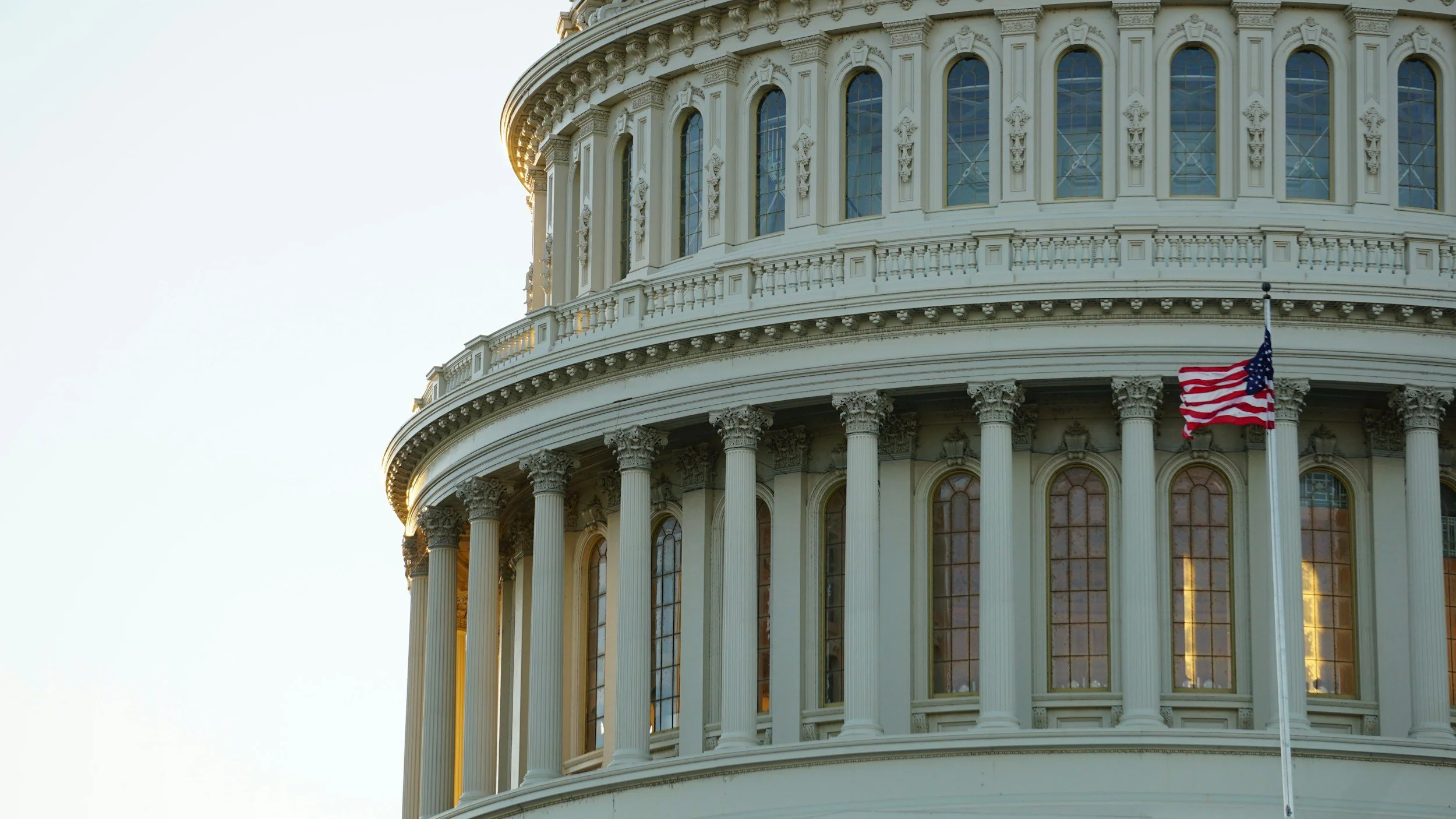
Congress’s Digital Transformation: Wiring Data for the AI Era
Congress is modernizing its data infrastructure for the AI era through GPO’s new Model Context Protocol, open legislative datasets, and AI-driven constituent engagement. For federal contractors, these initiatives signal a shift toward interoperability, verified data access, and new standards for AI-based tools supporting the U.S. legislative branch.

Tiger Natural Gas v. DLA Energy: Documentation as a Protest-Outcome Driver
GAO’s Tiger Natural Gas (B-423744 et al., Dec. 10, 2025) sustained a protest because DLA’s heavily redacted record prevented GAO from confirming awardees’ technical acceptability under LDC authorization/experience requirements, while denying challenges to discussions conducted alongside a reverse auction.

Why “Quality Management” in the Yellow Book Matters to Federal Contractors (Even If You’re Not an Auditor)
GAO’s December 2025 Yellow Book FAQ (GAO-26-108710) explains the 2024 shift from “quality control” to risk-based “quality management” for government audits. Federal contractors should understand the new objectives, risk assessments, monitoring/remediation, and reporting impacts—because audit quality can drive real cost, compliance, and payment outcomes.

What GAO’s FY2025 Bid Protest Report Signals to Federal Contractors—and Why “The Solicitation as Written” Still Wins
GAO’s FY2025 Bid Protest Annual Report to Congress shows a 14% sustain rate, 52% effectiveness rate, and recurring sustain grounds—unreasonable technical evaluations, cost/price errors, and improper proposal rejections. Learn what the Air Force non-implementation case teaches contractors about timing, remedies, and building protest-ready proposals.

Oversight, Data, and the Safety Case: What GAO’s Osprey Report Signals for Federal Contractors
GAO’s 2025 Osprey safety report highlights how weak oversight, fragmented risk processes, and poor information sharing can undermine mission assurance. Learn what the findings suggest for federal contractors on governance, risk registers, cross-stakeholder data sharing, and maintenance data integrity.

When Government Innovates, Citizens Don’t All Want the Same Thing
Public-sector innovations often fail when they miss what citizens actually value. Singler, Guenduez, and Demircioglu (2025) show Swiss citizens fall into four expectation groups, while public servants perceive only three—overlooking trialability, cost, and democratic involvement. Key takeaways for federal contractors delivering digital services.

Protesting a Win: What the ADS Case Teaches Federal Contractors About Timing Challenges
This article examines the ADS protest of an ICE detention IDIQ, where a winning contractor challenged the solicitation’s pricing caps and structure after award. It explains why the Court of Federal Claims treated those arguments as waived and what the case teaches federal contractors about timing their protests.

How Long Should Federal Contractors Keep Contract Records? A Practical Overview by Contract Type
Federal contractors often ask how long to keep records after closeout for FFP, CPFF, T&M, and construction contracts. This 500-word post explains FAR Subpart 4.7’s record-based retention rules, the three-year baseline, longer periods for certain records, and why contract type is only the starting point for a defensible retention policy.

Foreign-Owned Contractors, FOCI Mitigation, and Where $43 Billion in Federal Work Really Goes
Foreign-owned companies received about $43.1 billion in U.S. federal contracts in FY 2024. This post explains how that happens, how FOCI mitigation works, and how FedContractPros resources—our article “What Foreign Companies Need to Know” and the book Winning Federal Contracts—help international businesses enter this market.